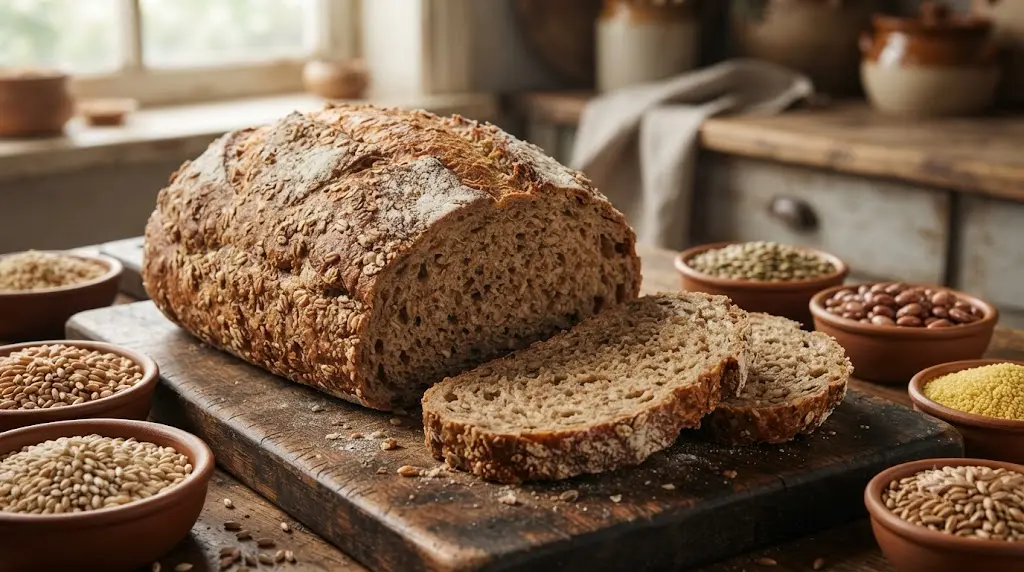
This biblical bread recipe is inspired by Ezekiel 4:9, a passage that names wheat, barley, beans, lentils, millet, and spelt as ingredients for bread. The combination makes a rustic loaf with a hearty crumb, an earthy grain flavor, and a texture that works especially well for toast and simple meals.
Unlike a standard white bread recipe, this version combines several grain flours with cooked beans and lentils. The method is adapted for a modern home kitchen, so you can prepare the dough with a mixing bowl, a loaf pan, and an ordinary oven without needing a grain mill.
If you are looking for a Bible bread recipe that explains both the biblical ingredients and how to bake a practical loaf, this guide covers the ingredients, step-by-step instructions, common baking problems, and the meaning behind Ezekiel 4:9.
What Is Biblical Bread?
Biblical bread is bread inspired by the grains and preparation methods mentioned in the Bible. One of the most recognized references is Ezekiel 4:9, where Ezekiel is instructed to combine six ingredients: wheat, barley, beans, lentils, millet, and spelt.
These ingredients are the foundation of many modern Ezekiel bread recipes. However, the Bible passage does not provide the exact flour ratios, yeast measurements, oven temperature, or rising times used in contemporary recipes.
This recipe uses the biblical ingredient combination as its starting point, with a few modern additions to help the dough rise and give the finished loaf a more manageable texture.
What makes this version practical? It uses familiar flours, cooked legumes, instant yeast, and standard US measurements. You do not need to sprout grains or mill an entire batch of dry ingredients to get started.
Biblical Bread Recipe Ingredients
You will need a mixture of grain flours, cooked legumes, and a few basic bread-making ingredients.
| Ingredient | Amount | Why it is used |
|---|---|---|
| Whole wheat flour | 1 cup | Provides the main structure and hearty flavor |
| Barley flour | ½ cup | Adds an earthy grain flavor |
| Spelt flour | ½ cup | Contributes a mild, nutty taste |
| Millet flour | ¼ cup | Adds another grain to the mixture |
| Cooked beans, mashed | ¼ cup | Represents the beans in Ezekiel 4:9 |
| Cooked lentils, mashed | ¼ cup | Adds moisture and a mild, earthy flavor |
| Warm water | About ¾–1 cup | Hydrates the dough; add gradually |
| Instant yeast | 2¼ teaspoons | Helps the bread rise |
| Honey | 1 tablespoon | Adds a little sweetness |
| Olive oil | 1 tablespoon | Helps keep the loaf tender |
| Salt | ¾ teaspoon | Balances the flavor |
Use plain cooked beans and lentils without heavy seasoning. Drain them thoroughly and mash them until smooth before measuring.
The amount of water is a starting range rather than an absolute measurement. Cooked legumes contain moisture, and different flour brands absorb water differently. Add enough water to make a cohesive, slightly tacky dough without leaving it soupy.
Choosing the Right Flour
Whole wheat flour: This provides the main structure. A finely milled whole wheat flour is easier to work with than a very coarse flour.
Barley flour: Barley contributes a distinctive flavor but does not behave like bread flour. Keep it as part of the blend rather than expecting it to produce an elastic dough on its own.
Spelt flour: Spelt gives the loaf a pleasant grain flavor. If you cannot find it, additional whole wheat flour is a practical substitute.
Millet flour: Finely ground millet flour distributes more evenly than whole millet seeds. If necessary, use a small amount of additional whole wheat flour, understanding that the result will differ from the six-ingredient inspiration.
Beans and lentils: Cooked, mashed beans and lentils make this version easier to prepare than a recipe that requires grinding dry legumes. Their moisture also affects the dough, so add the water gradually.
For a more literal grain-and-legume flour mixture, you can explore recipes using finely milled dry grains and legume flours. That is a different formulation and may require different hydration and baking adjustments.
How to Make Biblical Bread
1. Prepare the ingredients
Cook the beans and lentils until tender, then drain them well. Mash them thoroughly with a fork or potato masher. A smoother mixture helps the loaf hold together when sliced.
Measure the whole wheat, barley, spelt, and millet flours into a large mixing bowl. Whisk them together so that the different flours are evenly distributed.
2. Mix the dough
In a separate bowl, combine the warm water, instant yeast, and honey. Stir in the mashed beans and lentils, olive oil, and salt.
Add the flour mixture gradually, stirring until a rough dough forms. Start with about ¾ cup of water and add more a tablespoon at a time if the mixture is too dry to come together.
The dough should feel soft and slightly tacky. If it is dry and breaks apart, it needs more water. If it resembles a thick batter, add a little flour at a time until it can be handled.
3. Knead until cohesive
Transfer the dough to a lightly floured work surface. Knead for about 8–10 minutes, working it until it becomes smoother and holds its shape.
Because this bread contains several grain flours and mashed legumes, it will not have exactly the same elasticity as white bread dough. Do not keep adding flour just to make it feel like a conventional sandwich loaf.
A slightly tacky dough is preferable to one that feels stiff and dry.
4. Let the dough rise
Place the dough in a lightly oiled bowl and cover it. Leave it in a warm, draft-free place for about 60–90 minutes, checking for visible expansion.
The dough may rise more slowly than a white bread dough. The flour blend and the moisture from the legumes affect its structure, so judge the rise by appearance rather than relying entirely on the clock.
5. Shape the loaf
Gently press out any very large air pockets and shape the dough into a compact loaf. Place it in a greased 8-by-4-inch loaf pan.
Cover it loosely and let it rise for another 25–40 minutes, or until it looks noticeably puffed.
Avoid letting the dough rise so long that it collapses. A loaf that has risen too far may not hold its shape well in the oven.
6. Bake the bread
Preheat the oven to 350°F. Bake the loaf for approximately 35–45 minutes, checking toward the end of the baking time.
The crust should be browned, and the center should be fully baked rather than wet or gummy. An instant-read thermometer can help you check the center; around 190–200°F is a useful starting range for this type of loaf.
If the crust browns too quickly before the center is done, loosely cover the top with foil while the loaf finishes baking.
7. Cool before slicing
Remove the pan from the oven and let the bread rest for about 10 minutes. Transfer it to a wire rack and allow it to cool completely before cutting.
This step makes a noticeable difference in the crumb. Slicing too early can make the bread appear sticky or underbaked even when the center has reached the correct temperature.
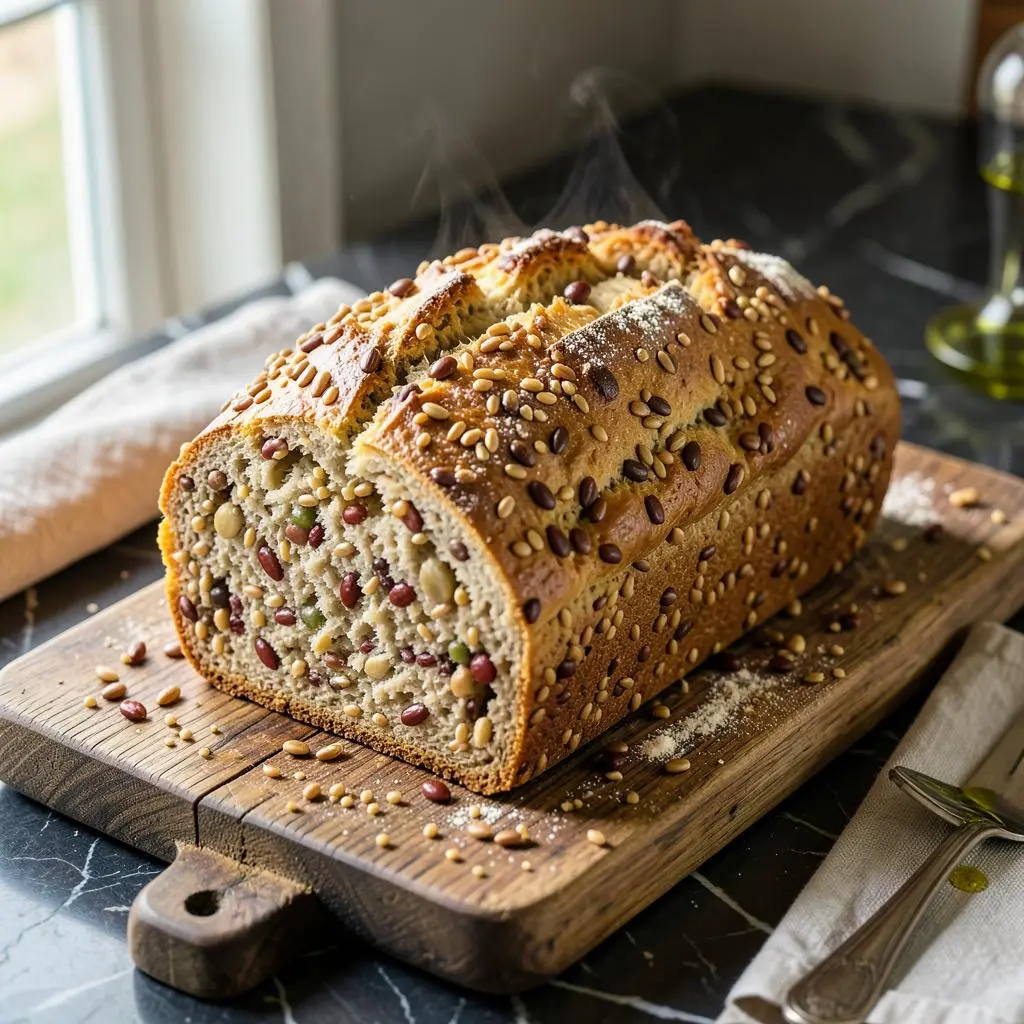
Biblical Bread Recipe
Ingredients
Equipment
Method
- Prepare the ingredients: Drain the cooked beans and lentils, mash them until smooth, and measure the flours into a large mixing bowl.
- Mix the dough: Combine the warm water, instant yeast, honey, mashed legumes, olive oil, and salt. Gradually stir in the flour mixture until a soft, slightly tacky dough forms.
- Knead the dough: Knead on a lightly floured surface for 8–10 minutes, until the dough becomes cohesive and smoother. Add extra flour sparingly.
- Let it rise: Place the dough in a lightly oiled bowl, cover, and leave in a warm spot for about 60–90 minutes, until visibly expanded.
- Shape the loaf: Gently press out large air pockets, shape the dough, and place it in a greased 8-by-4-inch loaf pan.
- Rise again: Cover loosely and let the dough rise for another 25–40 minutes, until slightly puffed.
- Bake the bread: Bake in a preheated 350°F oven for 35–45 minutes, until browned and cooked through. Check the center if needed.
- Cool before slicing: Rest in the pan for 10 minutes, then transfer to a wire rack and cool completely before cutting.
Notes
- Use plain cooked beans and lentils without heavy seasoning.
- Add water gradually because flour absorption and legume moisture vary.
- Expect a hearty, relatively dense loaf rather than a fluffy white sandwich bread.
- Replace spelt flour with whole wheat flour if necessary.
- This is a modern adaptation inspired by Ezekiel 4:9, not a historically verified reconstruction of ancient bread.
What Does Biblical Bread Taste Like?
This bread tastes hearty, earthy, and mildly nutty. Whole wheat gives it a familiar whole-grain flavor, while barley, spelt, and millet add more depth. The mashed beans and lentils make the crumb substantial.
Expect a denser loaf than ordinary white sandwich bread. It is best sliced thinly, toasted, or served with a meal rather than judged by how light and fluffy it is.
The flavor also depends on the type of beans and lentils used. Plain, mildly flavored legumes work best because heavily seasoned or salted varieties can change the taste of the finished bread.
What Does Ezekiel 4:9 Say About Bread?
Ezekiel 4:9 describes a mixture of wheat, barley, beans, lentils, millet, and spelt being used to make bread. Some Bible translations use the word “emmer” rather than “spelt,” so the grain name may differ depending on the translation.
The surrounding passage describes a prophetic sign involving Ezekiel and the food he was instructed to eat. The bread is therefore part of a specific biblical account, not simply a modern recipe recommendation.
The verse does not give modern baking instructions or exact proportions for each ingredient. Measurements such as cups, teaspoons, and oven temperatures in this recipe are contemporary adaptations designed for home baking.
If you want to compare the wording, read Ezekiel 4:9 in your preferred Bible translation before deciding which grain terminology to use.
Biblical Bread vs. Modern Ezekiel Bread
The terms “biblical bread” and “Ezekiel bread” are often used interchangeably in modern recipes, but the recipes themselves are not all identical.
| Feature | Biblical passage | This modern recipe |
|---|---|---|
| Wheat | Specifically named | Whole wheat flour |
| Barley | Specifically named | Barley flour |
| Beans | Specifically named | Cooked, mashed beans |
| Lentils | Specifically named | Cooked, mashed lentils |
| Millet | Specifically named | Millet flour |
| Spelt or emmer | Translation wording varies | Spelt flour |
| Yeast | Not specified in Ezekiel 4:9 | Instant yeast |
| Honey and olive oil | Not specified in the verse | Added for flavor and texture |
| Baking method | No modern oven instructions provided | Baked in a loaf pan at 350°F |
This distinction is important: the loaf is inspired by the ingredients in the Bible, but the proportions and preparation method are not claimed to be an exact reconstruction of ancient bread.
Tips for Better Results
Use a smooth legume mixture. Large pieces of beans or lentils can leave gaps in the crumb and make the bread harder to slice.
Adjust the water slowly. The flour blend and the moisture in the cooked legumes both affect dough consistency. Add water gradually rather than pouring in the full amount at once.
Do not over-flour the work surface. Too much extra flour can make the loaf dry and crumbly. Use only what you need to handle the dough.
Give the dough enough time to rise. A cool kitchen can slow yeast activity. Look for visible expansion instead of following a strict timer.
Check the center before removing the loaf. A browned crust does not always mean the inside is fully baked. Check the center if you are unsure.
Let the bread cool completely. This allows the crumb to settle and makes cleaner slices possible.
What to Serve With Biblical Bread
The rustic flavor of this bread works well with simple foods that do not overpower its grain taste.
- Serve toasted slices with butter or olive oil.
- Pair it with lentil soup, bean soup, or vegetable stew.
- Top it with hummus or mashed avocado.
- Use thin slices for open-faced sandwiches with cheese and tomato.
- Serve it alongside roasted vegetables or a simple grain-based meal.
Toasting is particularly useful if you prefer a firmer texture. It gives the slices a crisp surface while keeping the center pleasantly hearty.
How to Store Homemade Biblical Bread
Let the loaf cool completely before storing it. Keep it in an airtight bread bag or container and use it within about 2–3 days for the best quality. Since this recipe includes cooked legumes, do not assume it will keep as long as a dry commercial loaf.
For longer storage, slice the cooled bread and freeze the portions in a freezer-safe bag. Separate the slices if you want to remove them individually. Toast directly from frozen or thaw as needed.
Avoid storing warm bread in a sealed container, since trapped steam can make the crust soft and the crumb damp. Discard the loaf if you notice mold or an unusual smell.
Frequently Asked Questions
Is there a bread recipe in the Bible?
Yes. Ezekiel 4:9 describes bread made from wheat, barley, beans, lentils, millet, and spelt. Modern recipes adapt those ingredients for home baking.
What are the ingredients in Ezekiel 4:9 bread?
The passage names wheat, barley, beans, lentils, millet, and spelt. Some translations use emmer instead of spelt for the final grain.
How do you make biblical bread?
Combine grain flours with mashed beans and lentils, water, yeast, salt, and optional flavorings. Knead, let the dough rise, shape it, and bake.
Is biblical bread the same as Ezekiel bread?
The names are often used interchangeably today, but modern recipes vary. Some use freshly milled grains, while others use prepared flours and different proportions.
Was biblical bread made with yeast?
Ezekiel 4:9 does not specify yeast. The instant yeast in this recipe is a modern addition intended to help the loaf rise.
Can I make biblical bread without spelt?
Yes. Replace the spelt flour with whole wheat flour, although the flavor and texture will change. The result remains a modern adaptation inspired by Ezekiel 4:9.
Is Ezekiel bread gluten-free?
No. This recipe contains wheat, barley, and spelt, which contain gluten. It is not suitable for people who need to avoid gluten.
Why is my biblical bread dense?
Whole-grain flours and legumes naturally make a heavier loaf. Too little water, insufficient rising, or excessive added flour can make it even denser.
Can I use canned beans and lentils?
Yes. Drain and rinse plain canned beans and lentils, mash them thoroughly, and measure them after draining to keep excess liquid out of the dough.
How should I store biblical bread?
Cool the loaf completely, then store it in an airtight container for about 2–3 days. Freeze sliced portions if you need to keep the bread longer.