If you love the Yard House steak bowl, this homemade version gives you the same kind of hearty, colorful meal without making the kitchen feel like a restaurant prep station.
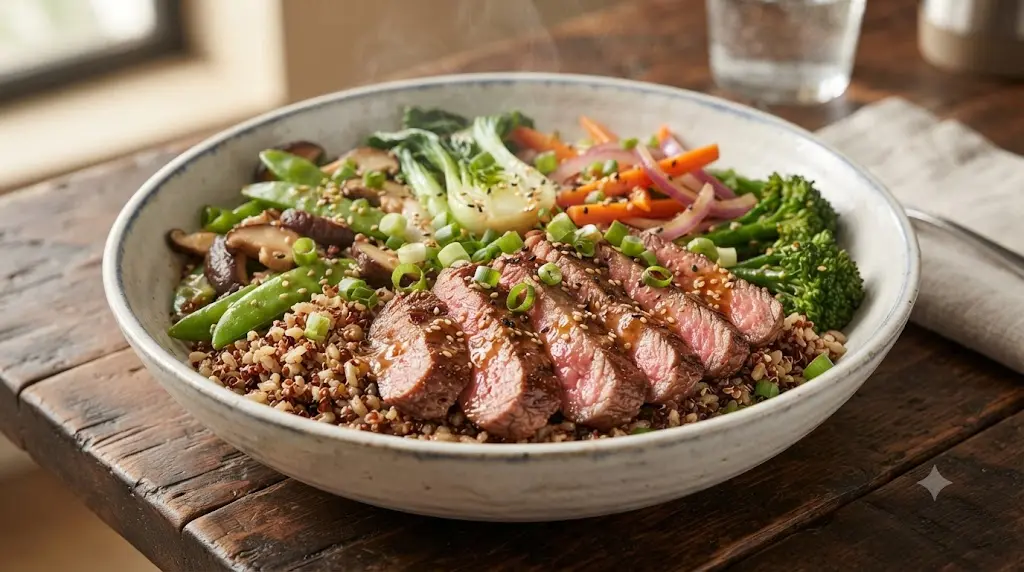
I like this bowl because every part has a job. The steak brings the savory, meaty flavor, the brown rice and quinoa make the base hearty, and the vegetables add freshness and crunch. A simple sesame-soy sauce pulls everything together.
This is a copycat-style Yard House steak bowl recipe, not the restaurant’s proprietary recipe. It is my practical home version inspired by the ingredients associated with the dish.
The best part is that you can prepare the components separately and bring them together right before serving. That keeps the steak juicy and prevents the vegetables from turning soft.
What Is a Yard House Steak Bowl?
A Yard House steak bowl is a restaurant-style grain bowl built around grilled steak, a rice-and-quinoa base, and stir-fried vegetables.
Yard House menu materials have described the steak bowl with grilled sirloin, sesame brown rice and red quinoa, along with vegetables such as mushrooms, snap peas, bok choy, carrots, red onion, asparagus or baby broccoli, and red pepper flakes.
At home, you do not need to copy every component exactly. The goal is to keep the same balance: savory steak + nutty grains + crisp vegetables + a flavorful sauce.
Why This Yard House Steak Bowl Works
The first time I made a steak bowl like this at home, the biggest lesson was not to overcook everything in one pan.
The steak needs high heat and a short cooking time. The vegetables need enough heat to soften slightly while keeping some bite. The rice and quinoa are already cooked, so they only need to be warmed and seasoned.
Keeping those jobs separate makes the final bowl much better.
- Sirloin gives you tender, beefy slices without being overly rich.
- Brown rice and quinoa create a hearty base with different textures.
- Mushrooms and snap peas add savory flavor and crunch.
- Bok choy and carrots keep the bowl fresh and colorful.
- Soy, sesame, garlic, and ginger give the sauce its savory depth.
- Red pepper flakes add a small amount of heat without taking over the bowl.
Ingredients You’ll Need
For the Steak
- 1 to 1½ pounds sirloin steak
- 1 tablespoon olive oil
- 1 tablespoon low-sodium soy sauce
- 1 teaspoon garlic powder
- ½ teaspoon onion powder
- ½ teaspoon black pepper
- ¼ teaspoon red pepper flakes
- ½ teaspoon kosher salt, or to taste
For the Rice and Quinoa
- 1½ cups cooked brown rice
- ¾ cup cooked red quinoa
- 1 teaspoon toasted sesame oil
- 1 teaspoon low-sodium soy sauce
For the Vegetables
- 1 cup sliced shiitake mushrooms
- 1 cup snap peas
- 1 cup chopped baby bok choy
- 1 medium carrot, thinly sliced
- ½ small red onion, thinly sliced
- 1 cup baby broccoli or asparagus
- 1 tablespoon cooking oil
- 2 cloves garlic, minced
For the Sauce
- 3 tablespoons low-sodium soy sauce
- 1 tablespoon sesame oil
- 1 tablespoon rice vinegar
- 1 tablespoon water
- 1 teaspoon honey
- 1 teaspoon freshly grated ginger
- 1 small garlic clove, grated
- ¼ teaspoon red pepper flakes
For Serving
- Sliced green onions
- Sesame seeds
- Lime wedges, optional
A Quick Ingredient Swap Guide
| Ingredient | Easy Substitute |
|---|---|
| Sirloin | Ribeye or flank steak |
| Red quinoa | Regular quinoa |
| Brown rice | Jasmine or white rice |
| Snap peas | Snow peas |
| Baby bok choy | Regular bok choy |
| Shiitake mushrooms | Cremini mushrooms |
| Baby broccoli | Asparagus |
| Low-sodium soy sauce | Tamari |
| Honey | Brown sugar |
You do not have to make a grocery trip for every vegetable. The bowl is flexible, and using what you already have can actually make it easier to prepare on a weeknight.
How to Make Yard House Steak Bowl
Prepare the Steak
Pat the steak dry with paper towels. This small step helps it brown instead of steaming in the skillet.
Season both sides with salt, black pepper, garlic powder, onion powder, and red pepper flakes.
Heat a large skillet over medium-high to high heat. Add the olive oil once the pan is hot.
Place the steak in the skillet and cook until nicely browned on both sides and cooked to your preferred doneness. The exact cooking time depends on the thickness of the steak.
Transfer it to a cutting board and let it rest for about 5 minutes.
Slice the steak thinly against the grain. This makes a noticeable difference in tenderness.
Make the Sauce
Add the soy sauce, sesame oil, rice vinegar, water, honey, ginger, garlic, and red pepper flakes to a small bowl.
Whisk until combined.
Taste a small amount before adding it to the pan. If you prefer more sweetness, add a little honey. For more heat, increase the red pepper flakes.
Warm the Rice and Quinoa
Add the cooked brown rice and red quinoa to a skillet over medium heat.
Stir in the sesame oil and soy sauce.
Cook just long enough to warm everything through, then remove from the heat.
I would not cook the grains for too long here. They should remain separate rather than becoming one soft mixture.
Stir-Fry the Vegetables
Heat the cooking oil in the same large skillet or a wok.
Add the red onion and garlic first. Cook briefly until fragrant.
Add the mushrooms, carrots, snap peas, and baby broccoli or asparagus.
Stir-fry until the vegetables are tender-crisp. Add the bok choy toward the end because it cooks faster than the other vegetables.
The vegetables should still have some bite when you remove them from the heat.
Combine the Bowl
Yard House Steak Bowl Recipe
Ingredients
Equipment
Method
- Season the steak: Pat the sirloin dry and season both sides with salt, black pepper, garlic powder, onion powder, and red pepper flakes.
- Sear the steak: Heat a large skillet over medium-high to high heat. Add olive oil and sear the steak until browned and cooked to your preferred doneness.
- Rest and slice: Transfer the steak to a cutting board and let it rest for about 5 minutes. Slice thinly against the grain.
- Make the sauce: Whisk together soy sauce, sesame oil, rice vinegar, water, honey, ginger, garlic, and red pepper flakes in a small bowl.
- Warm the grains: Heat the cooked brown rice and red quinoa over medium heat. Stir in sesame oil and soy sauce and warm until heated through.
- Cook the vegetables: Heat cooking oil in a skillet or wok. Add onion and garlic, followed by mushrooms, carrots, snap peas, and baby broccoli or asparagus. Cook until tender-crisp.
- Add the bok choy: Stir in the chopped bok choy near the end and cook briefly so it remains slightly crisp.
- Build the bowl: Add the warm brown rice and quinoa to serving bowls. Top with the cooked vegetables and sliced steak.
- Add the sauce: Drizzle the homemade sesame-soy sauce over the bowl. Finish with green onions and sesame seeds.
- Serve: Serve the Yard House steak bowl immediately while the steak and grains are warm.
Notes
- Slice against the grain for more tender steak.
- Do not overcrowd the skillet when cooking the steak or vegetables.
- Keep the vegetables crisp-tender instead of cooking them until soft.
- Add sauce gradually so the bowl does not become overly salty.
- Keep sauce separate for meal prep to maintain better texture.
Storage
Store the steak, grains, vegetables, and sauce in separate airtight containers in the refrigerator. Reheat the grains and vegetables first, then warm the steak briefly before assembling the bowl.Summary
This Yard House steak bowl recipe brings together tender sirloin, brown rice, quinoa, colorful vegetables, and a savory sesame-soy sauce for a satisfying restaurant-style dinner at home. Keeping each component properly cooked gives the bowl better texture and lets the steak remain the star.Spoon the warm brown rice and quinoa into serving bowls.
Add the stir-fried vegetables, then arrange the sliced steak over the top.
Drizzle with a little of the homemade sauce.
Finish with green onions and sesame seeds.
Serve immediately while the steak and grains are warm.
The Trick to Better Steak Bowl Flavor
Do not drown the bowl in sauce.
That was one of the easiest mistakes to make when testing this style of recipe. Too much sauce makes the rice heavy and can hide the flavor of the steak and vegetables.
Start with a small amount. You can always add more at the table.
Also, let the steak rest before slicing. Cutting into it immediately after cooking releases more of the juices onto the cutting board instead of keeping them in the meat.
Can You Make the Steak Bowl Ahead of Time?
Yes. This is actually a good meal-prep recipe.
For the best texture, store the steak, grains, vegetables, and sauce separately.
The rice and quinoa can be reheated together, while the vegetables can be warmed quickly in a skillet. Add the steak near the end so it does not spend too long reheating.
Keep the sauce separate until serving.
This approach also makes it easy to adjust each bowl. Someone who likes more vegetables can add extra, while someone who prefers a stronger sauce can add another spoonful.
What Rice Is Best for a Yard House Steak Bowl?
Brown rice with red quinoa is the best choice if you want to stay close to the style of the original bowl.
The brown rice has a pleasant chew, while quinoa adds a lighter texture and subtle nuttiness.
If you do not have red quinoa, regular quinoa works perfectly well. Jasmine rice is another option if you prefer a softer and more delicate grain.
The important thing is to use cooked grains that are not overly wet.
What Kind of Steak Should You Use?
Sirloin is my first choice because it has good beefy flavor and works well when quickly seared.
Ribeye gives you a richer result because of its higher fat content. Flank steak is another good option, especially if you slice it very thinly against the grain.
Whichever cut you choose, avoid overcooking it. A steak bowl is much better when the meat remains juicy and tender.
Can I Make a Yard House Chicken Bowl Instead?
Yes. The same basic bowl structure works with chicken.
Yard House menu materials have also listed chicken and shrimp bowl variations alongside the steak bowl.
Use boneless, skinless chicken thighs for a juicier result, or chicken breast if you prefer a leaner option.
Cook the chicken completely before slicing and adding it to the bowl.
Can You Make This Bowl Without Quinoa?
Absolutely.
If quinoa is not something you normally keep in your pantry, simply use brown rice. You can also use jasmine rice for a softer texture.
The quinoa adds texture rather than being essential to the recipe.
For a lower-carb variation, cauliflower rice can work, although the texture will be noticeably different from the original-style grain base.
How to Keep the Vegetables Crisp
The secret is high heat and short cooking.
Do not pile cold, wet vegetables into a small skillet. They will release water and steam instead of developing a little color.
Cook in batches if necessary.
Add firm vegetables such as carrots first, then mushrooms and snap peas, and finish with faster-cooking vegetables such as bok choy.
You want them tender enough to eat comfortably but still slightly crisp.
What Sauce Goes With a Yard House Steak Bowl?
A simple sesame-soy sauce works especially well with this bowl.
The homemade sauce in this recipe combines soy sauce, sesame oil, rice vinegar, ginger, garlic, honey, and red pepper flakes.
I prefer this lighter approach because the steak and vegetables already provide plenty of flavor.
If you are specifically searching for a Yard House steak sauce recipe, keep in mind that the steak bowl’s sauce should not automatically be treated as the same sauce served with other steak dishes at the restaurant.
Can I Use the Yard House Steak Sauce With This Bowl?
You can, but I would start with a small amount.
A steak sauce designed for grilled steak can be stronger, sweeter, or tangier than the lighter sesame-soy sauce used for a bowl.
For this recipe, the sauce should complement the vegetables and grains rather than overpower them.
If you already have a favorite steak sauce at home, serve it on the side instead of mixing a large amount into the entire bowl.
How I Like to Serve It
I like serving the bowl immediately after assembly, while the grains are warm and the vegetables still have their texture.
A few sliced green onions and sesame seeds make a surprisingly big difference. They add freshness and a little crunch without requiring another complicated topping.
For extra brightness, squeeze a small amount of lime over the finished bowl.
If you enjoy heat, add a little chili garlic sauce at the table.
Storage and Reheating
Store leftovers in airtight containers in the refrigerator.
For the best result, keep the sauce separate from the rice and vegetables.
When reheating, warm the rice and vegetables first. Add the steak near the end and heat only until warmed through.
The microwave works when you are in a hurry, but a skillet gives the vegetables a better texture.
Use refrigerated leftovers within a safe timeframe and reheat thoroughly before serving.
Common Mistakes to Avoid
Overcrowding the Steak Pan
Too much steak in one pan lowers the temperature and prevents good browning. Cook in batches when necessary.
Cutting the Steak Immediately
Give the steak a few minutes to rest before slicing. This helps keep the meat juicy.
Cooking the Vegetables Until Soft
The vegetables should have some texture. Stop cooking once they are tender-crisp.
Adding Too Much Sauce
Start small. You can always add more, but an overly salty bowl is difficult to fix.
Using Wet Rice
Freshly cooked, very wet rice can make the bowl mushy. Slightly cooled cooked grains usually work better.
Easy Ways to Customize Your Steak Bowl
The beauty of a homemade yard house steak bowl is that you can adjust it without changing the basic idea.
For extra vegetables, add broccoli, bell peppers, cabbage, or snow peas.
For more heat, increase the red pepper flakes or add chili garlic sauce.
For a sweeter flavor, add another small drizzle of honey to the sauce.
For a lighter bowl, increase the vegetables and reduce the amount of rice.
For meal prep, prepare the ingredients separately and assemble each serving when you are ready to eat.
Yard House Steak Bowl vs. Steak Bowl From Yard House
If you are looking for the exact restaurant experience, it is worth remembering that a homemade version will not be identical.
Restaurant cooking uses commercial equipment, specific ingredients, and preparation methods that are not always publicly available.
The goal of this recipe is different: it recreates the flavor profile, texture, and overall bowl concept in a practical home kitchen.
Yard House menu materials describe the steak bowl around grilled sirloin, sesame brown rice and red quinoa, and a vegetable combination that has varied between menu versions.
That gives you plenty of room to make the bowl your own without pretending that a homemade recipe is the restaurant’s confidential recipe.
Frequently Asked Questions
What is in a Yard House steak bowl?
A Yard House steak bowl is centered around steak with a grain base and vegetables. Yard House menu descriptions have included grilled sirloin, sesame brown rice, red quinoa, mushrooms, snap peas, bok choy, carrots, red onion, asparagus or baby broccoli, and red pepper flakes.
What kind of steak is best for this recipe?
Sirloin is a great choice because it has a beefy flavor, cooks quickly, and slices nicely. Ribeye or flank steak can also work, but slice either cut against the grain after resting.
Can I use white rice instead of brown rice?
Yes. Brown rice gives the bowl more chew, but jasmine or white rice works when you want a softer texture. You can also use brown rice alone if you do not have quinoa.
Is this the official Yard House steak bowl recipe?
No. This is a homemade copycat-style recipe inspired by the ingredients and general composition described in Yard House menu materials. It is adapted for a normal home kitchen rather than presented as the restaurant’s proprietary recipe.
Can I make this steak bowl for meal prep?
Yes. Prepare the steak, grains, vegetables, and sauce separately and refrigerate them in airtight containers. Keeping the sauce separate helps the rice and vegetables retain a better texture when reheated.
What sauce goes with a Yard House steak bowl?
A light sesame-soy sauce works particularly well with the combination of steak, grains, and vegetables. Soy sauce, sesame oil, ginger, garlic, rice vinegar, and a little honey create a balanced homemade option.
Can I make this with chicken?
Yes. Replace the steak with boneless chicken breast or thighs and cook until fully done. The same rice, quinoa, vegetables, and sauce can be used to make a Yard House-style chicken bowl at home.
Why is my steak tough?
The most common reasons are overcooking, cutting with the grain, or using a tougher cut without slicing it properly. Let the cooked steak rest for about five minutes, then slice it thinly against the grain.
How do I make the vegetables taste like a restaurant bowl?
Use a hot pan and avoid overcrowding it. Cook the vegetables quickly so they develop some color while remaining crisp-tender. Adding garlic and a small amount of sesame oil also gives them more depth.
Can I make this bowl without quinoa?
Yes. Brown rice alone works well, and jasmine rice is another easy substitute. Quinoa mainly contributes texture and nuttiness, so leaving it out will not prevent you from making a satisfying steak bowl.
Final Thoughts
A good Yard House steak bowl recipe does not need to be complicated.
The key is getting the individual parts right: a well-seared steak, warm grains, vegetables that still have some bite, and just enough sauce to connect everything.
Once you have that combination down, you can change the vegetables, rice, protein, or heat level depending on what your family likes.
That is what I enjoy most about making this bowl at home. It feels like a restaurant-inspired dinner, but you still have complete control over what goes into it.