If you’re craving juicy chicken with a buttery, tangy flavor and lightly browned edges, this port a pit chicken recipe is a great place to start. The chicken is coated with a savory vinegar-based sauce, basted while it cooks, and finished until the outside is nicely browned while the inside stays tender.
This recipe is inspired by the flavor and cooking style associated with Nelson’s Port-A-Pit chicken. It is a homemade interpretation, not Nelson’s official or proprietary recipe.
The best part is that you don’t need a commercial chicken pit. A grill or oven can give you a very satisfying homemade version when you use controlled heat and baste the chicken gradually.
Why You’ll Like This Port A Pit Chicken Recipe
This is not meant to taste like a typical chicken covered in thick, sweet barbecue sauce.
The flavor is built around a few simple elements:
- Butter for richness
- Vinegar for a noticeable tang
- Worcestershire sauce for savory depth
- Garlic and black pepper for seasoning
- Bone-in chicken for a juicy result
- Repeated basting for a flavorful exterior
The sauce stays relatively thin, which is important. Instead of putting one heavy coating on the chicken, you build the flavor with several light applications as it cooks.
That gives the chicken a more savory, tangy character and helps the exterior brown without becoming overly sweet.
What Is Port A Pit Chicken?
Port-A-Pit chicken is a style of chicken associated with pit-style cooking and frequent basting. The chicken is generally cooked with controlled heat while a seasoned sauce is applied during the cooking process.
The name is strongly associated with Nelson’s and its chicken products, which is why searches such as nelsons chicken recipe, nelson’s port a pit chicken recipe, and port-a-pit chicken often appear together.
For a home cook, the basic idea is simple: use flavorful chicken pieces, prepare a tangy basting sauce, cook with controlled heat, and keep building flavor as the chicken cooks.
You can do that with a backyard grill or in the oven.
What Makes This Different From BBQ Chicken?
The easiest way to understand the difference is the sauce.
Many BBQ chicken recipes use a thick, sweet sauce that is brushed on toward the end of cooking. Port-A-Pit-style chicken is more focused on a thin, savory, tangy basting sauce.
That means you get more of the chicken’s natural flavor instead of covering it completely with a sugary glaze.
If you have been searching for portapit chicken, porta pit chicken, or port o pit chicken, this is the flavor profile you are probably looking for.
Ingredients You’ll Need
For the chicken:
- Bone-in, skin-on chicken leg quarters
- Vegetable oil
- Paprika
- Garlic powder
- Onion powder
- Black pepper
- Salt
- Dried oregano
- Cayenne pepper, optional
For the basting sauce:
- Apple cider vinegar
- Water
- Vegetable oil
- Worcestershire sauce
- Hot sauce
- Paprika
- Garlic powder
- Black pepper
- Salt
The exact balance can be adjusted to your preference. If you prefer a milder chicken, leave out the cayenne and reduce the hot sauce.
If you like more tang, a little extra vinegar can be added, but I would increase it gradually rather than making the sauce sharply acidic.
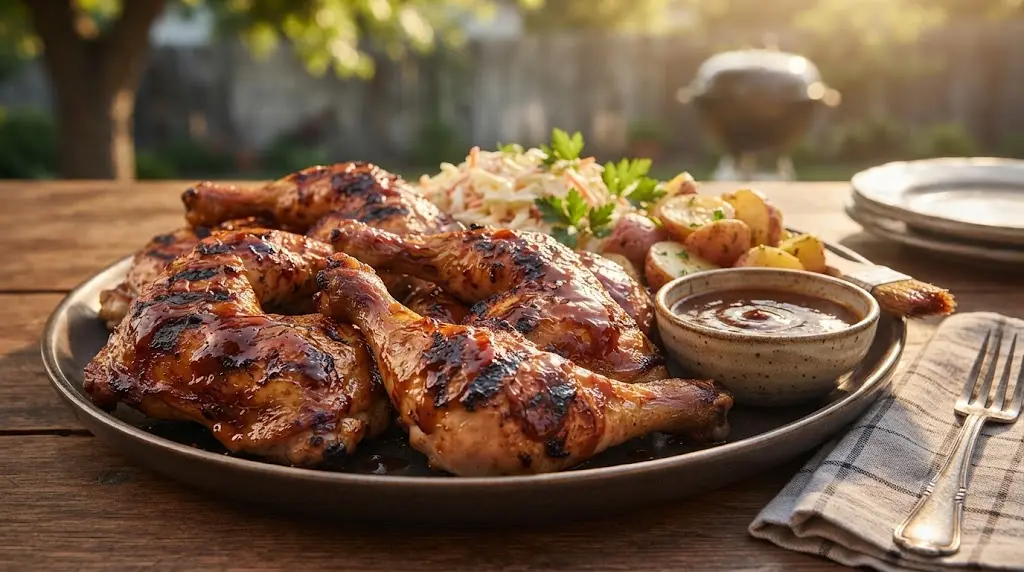
Port A Pit Chicken Recipe: Nelson’s-Style Chicken
Ingredients
Equipment
Method
- Prepare the chicken: Pat the chicken pieces thoroughly dry with paper towels. Trim only large amounts of excess fat while leaving the skin intact.
- Season the chicken: Combine paprika, garlic powder, onion powder, salt, black pepper, oregano, and cayenne. Rub the seasoning evenly over every chicken piece.
- Let the seasoning rest: Place the seasoned chicken in the refrigerator for about 30 minutes while you prepare the basting sauce.
- Make the basting sauce: Whisk together apple cider vinegar, water, vegetable oil, Worcestershire sauce, hot sauce, paprika, garlic powder, black pepper, and salt until evenly combined.
- Prepare the grill: If grilling, create a two-zone cooking area with moderate or indirect heat on one side and stronger heat available for finishing.
- Start cooking: Place the chicken on the grill and allow the surface to begin cooking before applying a light coating of the basting sauce.
- Baste gradually: Brush the chicken with thin layers of sauce while it cooks, turning the pieces as needed. Avoid flooding the chicken with sauce because excess liquid can cause grill flare-ups.
- Control the heat: Move the chicken to indirect heat if the outside is browning too quickly. Continue cooking until the meat is nearly done.
- Check the temperature: Insert an instant-read thermometer into the thickest part of the chicken without touching the bone. Cook until it reaches 165°F.
- Brown the chicken: Move the chicken briefly over stronger heat to develop golden-brown color and lightly charred edges. Watch carefully so the basting sauce does not burn.
- Rest before serving: Remove the chicken from the heat and let it rest for several minutes before serving.
- Preheat the oven: Heat the oven to 400°F.
- Arrange the chicken: Place the seasoned chicken skin-side up in a lightly oiled roasting or baking pan.
- Begin baking: Bake until the chicken has started to brown, then brush it lightly with the basting sauce.
- Continue basting: Turn or rotate the chicken as needed and apply additional thin layers of sauce during cooking.
- Check doneness: Continue cooking until the thickest part reaches 165°F on an instant-read thermometer.
- Finish the exterior: If needed, use the broiler briefly at the end to deepen the color. Watch the chicken closely because the sauce can brown quickly.
- Rest and serve: Let the chicken rest for several minutes before serving.
Notes
Storage
Store leftover chicken in an airtight container in the refrigerator and use within 3–4 days. Reheat gently until thoroughly hot. For crispier skin, finish uncovered in the oven or air fryer.Recipe Summary
This port a pit chicken recipe brings together juicy bone-in chicken, a tangy vinegar-based basting sauce, Worcestershire sauce, garlic, and warm spices. The chicken can be grilled for smoky, browned edges or cooked in the oven for an easy weeknight version. Gradual basting and careful temperature control are the keys to flavorful, tender chicken.How to Make Port A Pit Chicken
Prepare the Chicken
Start by patting the chicken pieces dry with paper towels.
This helps remove excess surface moisture and gives the seasoning a better chance to stick to the chicken.
Trim any large pieces of excess fat, but there is no need to remove the skin. The skin helps protect the meat while it cooks and gives you a better surface for browning.
Season the Chicken
Mix the paprika, garlic powder, onion powder, black pepper, salt, oregano, and cayenne pepper in a small bowl.
Rub the seasoning over the chicken, making sure to cover the skin and exposed sides.
Let the seasoned chicken sit while you prepare the basting sauce.
This short resting period gives the seasoning time to settle onto the surface instead of falling off immediately when the chicken hits the heat.
Prepare the Basting Sauce
Combine the apple cider vinegar, water, vegetable oil, Worcestershire sauce, hot sauce, paprika, garlic powder, black pepper, and salt.
Whisk until the mixture is evenly combined.
The sauce should taste tangy, savory, and slightly spicy rather than sweet.
That is intentional.
The goal is to create a basting sauce that complements the chicken instead of turning it into traditional sweet BBQ chicken.
Set Up the Grill
If you are grilling, create a two-zone cooking setup.
Keep one area at moderate or indirect heat and another area available for stronger heat later.
This gives you much better control than placing the chicken directly over the hottest part of the grill for the entire cooking time.
Chicken pieces can vary considerably in size, so controlling the heat is more useful than trying to follow one exact cooking time.
Begin Cooking
Place the chicken on the grill with the skin side positioned according to your heat setup.
Let the chicken begin cooking before applying too much sauce.
Once the surface has started to cook, brush it lightly with the basting mixture.
Turn the chicken as needed and continue applying thin layers of sauce throughout cooking.
The key word is thin.
A large amount of sauce at once can drip onto the flames, create flare-ups, and cause the outside to darken before the inside is cooked.
Keep Basting
Continue basting the chicken at intervals while it cooks.
Each layer adds another little bit of the buttery, tangy, savory flavor.
If you notice flare-ups, move the chicken to the cooler side of the grill.
Do not try to solve a flare-up by adding more sauce. Give the flames a chance to settle before continuing.
Check the Internal Temperature
The chicken is ready when the thickest part reaches 165°F on an instant-read thermometer.
Insert the thermometer into the thickest part of the meat without touching the bone.
Cooking time can vary depending on the size of the chicken pieces, grill temperature, and whether you are using leg quarters, thighs, or drumsticks.
Temperature is therefore a better guide than simply watching the clock.
Finish Over Higher Heat
Once the chicken is nearly cooked through, you can move it toward the hotter part of the grill for a short finishing period.
This helps develop deeper color and lightly charred edges.
Watch the chicken carefully during this stage.
You want browned, flavorful skin—not burnt sauce.
Remove the chicken once it has reached the proper internal temperature and the exterior has the color you want.
Let the Chicken Rest
Give the chicken a few minutes to rest before serving.
This makes it easier to serve without immediately losing a large amount of juice when you cut into it.
The finished chicken should have a savory, tangy exterior with juicy meat underneath.
How to Make Port A Pit Chicken in the Oven
You can absolutely make this port a pit chicken recipe without a grill.
The oven method is especially useful when you want a simple weeknight dinner or the weather is not suitable for outdoor cooking.
Arrange the seasoned chicken in a suitable baking or roasting pan and cook it in a preheated oven.
Brush the chicken with the basting sauce during cooking rather than adding the entire mixture at the beginning.
Turn the pieces when appropriate and continue with light layers of sauce.
Near the end, increase the heat briefly if necessary to improve browning, but keep a close eye on the chicken because the sauce can darken quickly.
Always check the thickest part with an instant-read thermometer.
Grill vs. Oven
| Method | Best For | Result |
|---|---|---|
| Grill | Cookouts and smoky flavor | More char and grilled aroma |
| Oven | Easy home cooking | Tender chicken with controlled browning |
| Oven + grill finish | Extra browning | Juicy inside with a more grilled exterior |
For the closest backyard-cookout feeling, I prefer the grill.
For convenience, the oven is perfectly practical.
The Best Chicken Pieces to Use
Chicken Leg Quarters
Leg quarters are one of the most forgiving choices for this recipe.
The combination of dark meat, skin, and bone helps the chicken stay moist during longer cooking.
Chicken Thighs
Thighs are another excellent option.
They have a rich flavor and generally tolerate longer cooking better than very lean chicken pieces.
Drumsticks
Drumsticks are convenient for parties because they are easy to portion and serve.
They also provide plenty of surface area for the basting sauce.
Chicken Breasts
Breasts can be used, but they require more attention.
Because they are leaner, they can become dry if left over high heat for too long.
If using breasts, monitor the internal temperature carefully and remove them once they are safely cooked.
How to Get Better Browning
Good browning is mostly about heat control.
If the chicken is getting dark before it is cooked inside, move it away from direct heat.
If the chicken is cooked but lacks color, give it a short finishing period over stronger heat.
Do not keep adding sauce simply to make the chicken look darker. The sauce should build flavor, while the heat creates the final browning.
A clean, properly heated grill grate also helps prevent the chicken skin from sticking.
How Tangy Should the Sauce Be?
The sauce should have a clear vinegar tang, but it should not taste harsh.
If you taste the sauce before cooking and think it is slightly sharper than you would normally want, that is not necessarily a problem. The flavor becomes more balanced once it is spread across the chicken and combined with the meat’s natural juices.
For a milder version, reduce the vinegar slightly and add a little more water.
For a sharper version, increase the vinegar gradually.
Can You Add BBQ Sauce?
You can, but I would not add a thick BBQ sauce if your goal is to keep the traditional Port-A-Pit-style flavor direction.
A small amount can be used during the final stage if you personally prefer a sweeter finish.
However, too much sweet sauce changes the recipe from a tangy pit-style chicken into something closer to conventional BBQ chicken.
What Does Nelson’s Chicken Taste Like?
Searches for nelsons chicken, nelson chicken recipe, and nelson’s chicken usually point toward the distinctive Port-A-Pit-style flavor people are trying to recreate at home.
The flavor is best described as:
- Savory
- Tangy
- Buttery
- Lightly peppery
- Slightly smoky when grilled
- Juicy rather than heavily glazed
The vinegar gives the chicken brightness, while Worcestershire sauce adds depth.
That combination is why this style can taste flavorful without needing a very sweet sauce.
Can You Make Nelson’s-Style Chicken Without a Pit?
Yes.
A commercial pit provides a particular cooking environment, but you can reproduce the general cooking approach at home with a grill or oven.
The important elements are controlled heat, repeated basting, and finishing the chicken properly.
A two-zone grill is particularly useful because it lets you cook the chicken more gently before giving it a short burst of stronger heat for browning.
What About Nelson’s Pit Potatoes?
If you are also looking for nelson’s pit potatoes recipe or how to make Nelson’s pit potatoes, potatoes can make a natural side for this chicken.
For a complete meal, you can pair the chicken with roasted or grilled potatoes, coleslaw, baked beans, corn, or a simple green vegetable.
The tangy chicken works particularly well with sides that are creamy, starchy, or lightly seasoned.
Best Side Dishes for Port A Pit Chicken
You do not need complicated sides for this chicken.
Good choices include:
- Creamy coleslaw
- Potato salad
- Roasted potatoes
- Baked beans
- Corn on the cob
- Macaroni and cheese
- Green beans
- Cucumber salad
- Fresh garden salad
For a casual backyard meal, chicken, coleslaw, and potatoes make an easy combination.
Common Mistakes to Avoid
Using Too Much Sauce at Once
Heavy applications can cause flare-ups and make the outside brown too quickly.
Use several thin layers instead.
Cooking Only by the Clock
Chicken pieces are not all the same size.
Use an instant-read thermometer and check the thickest part.
Using High Heat From Start to Finish
High heat can burn the exterior while leaving the inside undercooked.
Controlled heat gives you more room to build color gradually.
Making the Sauce Too Sweet
A sweet BBQ sauce can overwhelm the tangy character of Port-A-Pit-style chicken.
Keep the base savory if that is the flavor you are trying to achieve.
Cutting the Chicken Immediately
Allowing the chicken to rest for a few minutes makes serving easier and helps retain its juices.
Reusing Raw-Chicken Sauce
Any sauce that has touched raw chicken should not be brushed onto cooked chicken unless it has been thoroughly cooked first.
For convenience, keep a portion of the basting sauce separate for later use.
How to Store Leftover Chicken
Let cooked chicken cool appropriately, then place it in an airtight container and refrigerate it.
For the best quality, use refrigerated leftovers within a few days.
When reheating, use moderate heat rather than aggressively heating the chicken for a long time.
If the skin has softened, an uncovered oven or air-fryer finish can help improve the texture.
Can You Freeze Port A Pit Chicken?
Yes.
Cooked chicken can be frozen in an airtight freezer-safe container or well-wrapped freezer packaging.
When you are ready to eat it, thaw it safely in the refrigerator and reheat it thoroughly.
The texture may not be exactly the same as freshly grilled chicken, but it can still make a convenient leftover meal.
My Favorite Way to Serve It
For a simple American-style dinner, I would keep the plate straightforward.
Serve the chicken with creamy coleslaw, roasted potatoes, and a vegetable.
The chicken already has plenty of flavor, so the sides do not need a complicated sauce.
If serving it at a cookout, put extra coleslaw and potatoes on the table and let everyone choose their portions.
Frequently Asked Questions
What is a port a pit chicken recipe?
A port a pit chicken recipe is a pit-style chicken preparation that uses controlled cooking and repeated basting with a savory, tangy sauce. Homemade versions are commonly prepared on a grill or in an oven rather than a commercial chicken pit.
Is Port-A-Pit chicken the same as BBQ chicken?
Not exactly. Port-A-Pit-style chicken generally focuses on a thinner savory and tangy basting sauce, while many BBQ chicken recipes use a thicker, sweeter sauce that caramelizes heavily on the outside.
Can I make port a pit chicken in the oven?
Yes. An oven is an easy home alternative to a grill or commercial pit. Cook the chicken with controlled heat, baste it periodically, and check the thickest portion with an instant-read thermometer before serving.
What chicken is best for port a pit chicken?
Bone-in chicken leg quarters are an excellent choice because dark meat stays moist during longer cooking. Bone-in thighs and drumsticks also work very well. Chicken breasts can be used but require closer temperature control.
How do you keep port a pit chicken juicy?
Use bone-in chicken, avoid excessive heat, baste gradually, and remove the chicken once it reaches a safe internal temperature. Overcooking is one of the easiest ways to turn otherwise flavorful chicken dry.
Can I grill Nelson’s-style chicken?
Yes. A grill is particularly useful when you want smoky flavor and browned edges. Use controlled or indirect heat while the chicken cooks, then finish it over stronger heat briefly for additional color.
What gives port a pit chicken its tangy flavor?
Vinegar provides the characteristic tang, while Worcestershire sauce adds savory depth. Butter or oil balances the acidity, and seasonings such as garlic, pepper, and paprika round out the flavor.
Can I use chicken breasts instead of leg quarters?
Yes, but breasts are leaner and can dry out more quickly. Keep the heat controlled and check the thickest part with a thermometer. Remove them once they reach a safe internal temperature rather than cooking far beyond it.
What should I serve with port a pit chicken?
Coleslaw, potato salad, roasted potatoes, baked beans, corn, macaroni and cheese, green beans, and fresh salads all pair nicely with the savory and tangy flavor of the chicken.
Is this the official Nelson’s chicken recipe?
No. This is a homemade recipe inspired by the Port-A-Pit-style flavor and cooking method. It should not be presented as Nelson’s official or proprietary recipe unless published directly by the company.
Final Thoughts
A good port a pit chicken recipe is less about using dozens of ingredients and more about getting the cooking process right.
Use bone-in chicken, build a tangy basting sauce, keep the heat controlled, and apply the sauce gradually instead of flooding the chicken all at once.
The result should be juicy chicken with a savory, buttery, vinegar-forward flavor and nicely browned edges.
And if you are specifically searching for a nelsons chicken recipe, this homemade Nelson’s-style version gives you a practical way to enjoy that flavor profile without needing a commercial pit.