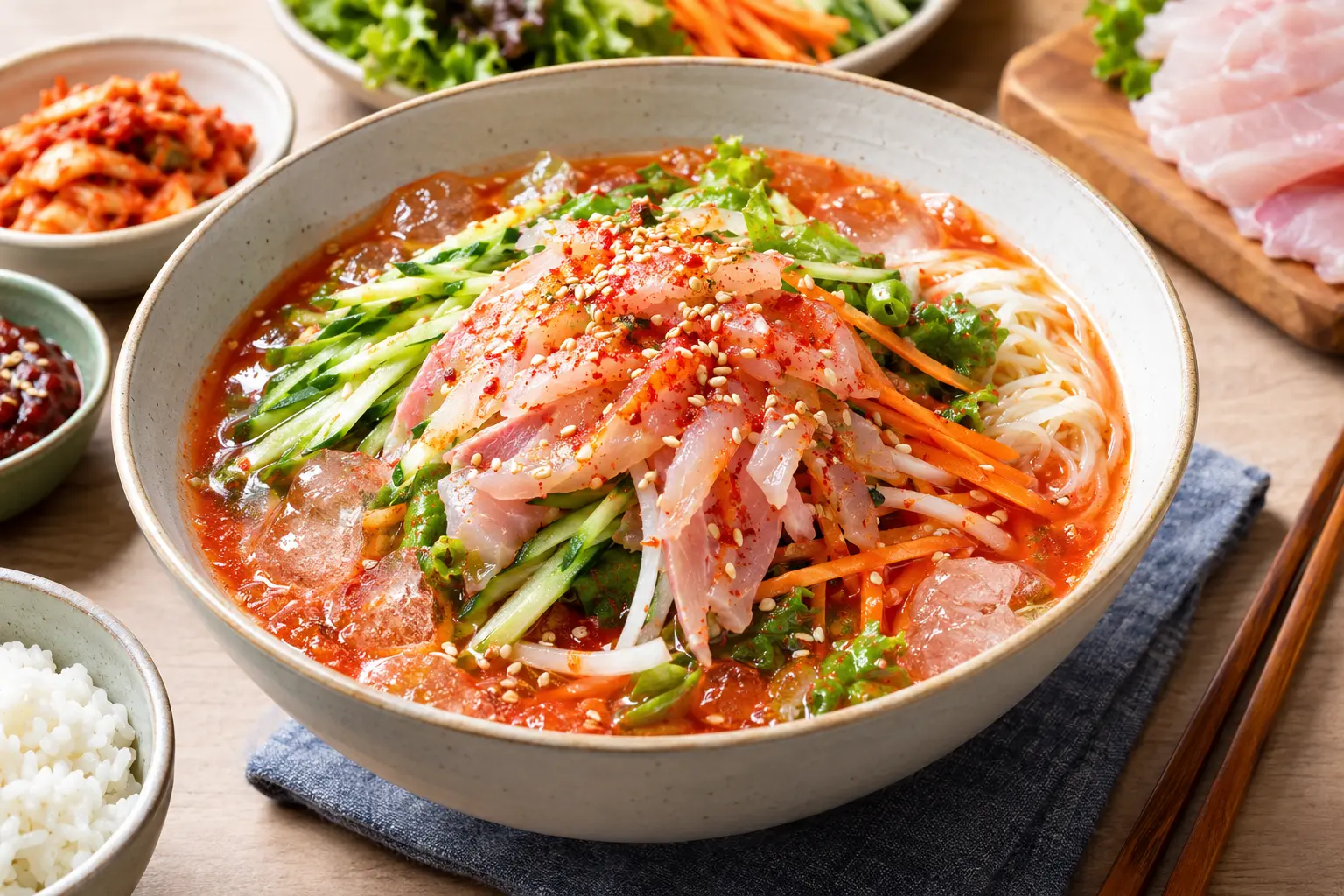
If you are new to mulhoe Korean food, imagine a bowl that brings together thinly sliced fresh fish, crunchy vegetables, spicy-sweet sauce, cold broth, and noodles. It is refreshing, bold, tangy, and surprisingly light compared with many hot Korean dishes.
The first thing that stands out about mulhoe is the temperature. This is meant to be served very cold, often with plenty of ice or thoroughly chilled broth. The combination of cold liquid and spicy seasoning gives the dish its distinctive character.
In Korean, mulhoe is written as . You may also see it written as mulhwe, moolhoe, or mul hwe in English. The word combines mul, meaning water, with hoe, referring to raw fish.
For a home version, the most important part is not making the recipe complicated. It is choosing appropriate fish, keeping everything properly chilled, and balancing spicy, sour, slightly sweet, and savory flavors.
What Is Mulhoe?
Mulhoe is a Korean cold raw-fish dish served with vegetables and a seasoned chilled broth or sauce. Depending on the region and recipe, it can be served with rice, thin noodles, or simply as a fish-and-vegetable bowl.
Traditional versions are strongly associated with Korea’s coastal food culture. Pohang is particularly well known for mulhoe, while different regions developed their own versions using different seafood, broths, and seasonings.
Some versions are quite brothy, while others are closer to a spicy noodle salad with just enough liquid to coat everything. That difference is useful when making it at home because you can adjust the amount of chilled broth according to how you like to eat it.
What Does Mulhoe Taste Like?
Mulhoe has several flavors happening at once:
- Spicy from Korean chili paste and sometimes gochugaru
- Tangy from vinegar
- Slightly sweet from sugar, fruit, or another sweetener
- Fresh and crisp from raw vegetables
- Savory and nutty from sesame oil and sesame seeds
- Clean and refreshing from the ice-cold broth
If you enjoy ceviche, spicy Korean cold noodles, or other bright seafood dishes, the flavor combination may feel surprisingly familiar. The main difference is the Korean seasoning profile and the way the cold broth becomes part of the dish.
Mulhoe Korean Ingredients
The ingredients can vary, but this combination creates a balanced home-style bowl.
| Ingredient | Why it matters |
|---|---|
| Sashimi-grade fish | Provides the main protein and delicate seafood flavor |
| Gochujang | Adds Korean chili flavor, sweetness, and body |
| Vinegar | Gives the broth its sharp, refreshing acidity |
| Gochugaru | Adds extra chili flavor and adjustable heat |
| Cucumber | Adds crunch and freshness |
| Onion | Gives the bowl a sharp, crisp bite |
| Carrot | Adds color and mild sweetness |
| Lettuce | Makes the dish feel lighter |
| Garlic | Adds savory depth |
| Sesame oil | Adds a toasted, nutty finish |
| Sesame seeds | Provide texture and aroma |
| Cold broth or water | Creates the refreshing base |
| Thin wheat noodles | Turn the dish into a more substantial meal |
| Ice | Keeps the finished mulhoe properly cold |
Some traditional preparations also use ingredients such as Asian pear, rice, different seafood, or region-specific broths.
Choosing Fish for Mulhoe
This is one place where I would not cut corners.
Because the fish is eaten raw, use fish that is specifically sold for raw consumption, such as sashimi-grade fish from a reputable seafood seller, and follow the seller’s storage instructions.
Tuna, salmon, flatfish, and other suitable seafood can work depending on availability and preference. Different Korean preparations use different fish and seafood, so there is no single fish that defines every bowl of mulhoe.
Keep the fish refrigerated until you are ready to slice and serve it. Do not leave raw seafood sitting at room temperature while preparing the rest of the dish.
If you are pregnant, immunocompromised, older, or preparing food for someone at higher risk from foodborne illness, raw seafood may not be appropriate. A cooked seafood variation is the safer choice.
How to Make Mulhoe Korean Style
Prepare the Cold Broth
Start by making the seasoned liquid before preparing the fish.
Mix your Korean chili paste with vinegar, a little sweetness, garlic, and the other seasonings. Add very cold water or a chilled broth and stir until the mixture is smooth.
Taste it before adding the fish.
You are looking for a flavor that is spicy, tangy, lightly sweet, and savory. The cold temperature can make flavors seem slightly less intense, so the seasoning should taste lively rather than flat.
For an especially refreshing bowl, chill the broth well in advance.
Prepare the Vegetables
Thinly slice the cucumber, onion, carrot, and lettuce.
I like keeping the vegetables fairly thin because they should mix easily with the fish rather than overpower it. A little crunch makes a big difference here.
If using Asian pear, cut it into thin matchsticks. Its mild sweetness works particularly well with the spicy and acidic broth.
Prepare the Noodles
Cook the thin noodles according to the package directions.
Once tender, rinse them thoroughly under cold water. This removes excess surface starch and cools them quickly.
Drain them very well. Watery noodles can dilute the mulhoe sauce and make the finished bowl taste weaker than intended.
Slice the Fish
Slice the chilled fish into thin strips.
Try to keep the pieces reasonably similar in size so every bite gets a good combination of fish, vegetables, and seasoning.
Keep the sliced fish refrigerated while you finish assembling the other ingredients.
Assemble the Bowl
Recipe Card 1
Place the noodles and vegetables in a large serving bowl. Add the sliced fish and spoon the seasoned cold broth over the top.
Finish with sesame oil and sesame seeds.
Add crushed ice just before serving if your broth is not cold enough.
The goal is to keep the entire bowl extremely cold while you eat it. This is not a dish where you want to pour warm or room-temperature liquid over the ingredients.
How to Make Mulhoe Taste More Like a Korean Restaurant
The easiest mistake is making the broth too mild.
Mulhoe needs enough acidity and chili flavor to stand up to the cold temperature, fish, vegetables, and noodles. Start with a balanced amount of seasoning and adjust after tasting.
If it tastes too spicy, add a little more chilled liquid or a small amount of sweetness.
If it tastes flat, a little more vinegar can brighten it.
If it tastes too acidic, balance it with a small amount of sweetness.
If you want more heat, increase the gochugaru rather than adding a large amount of extra gochujang. This lets you increase chili flavor without making the broth excessively thick.
Keep the Broth Very Cold
This is probably the simplest improvement you can make.
Prepare the broth ahead of time and refrigerate it until thoroughly chilled. You can also use crushed ice immediately before serving.
A chilled bowl can help keep the ingredients cold for longer, especially if you are serving mulhoe outdoors during warm weather.
Should Mulhoe Be Soupy or Thick?
There is no need to choose one exact consistency.
For a soupier bowl, add more chilled broth. This lets you drink the spicy liquid between bites.
For a thicker version, use less liquid and allow the chojang-based seasoning to coat the fish, vegetables, and noodles more heavily.
This difference also appears across recipes. Some preparations emphasize cold broth, while others resemble a spicy noodle salad with only a small amount of liquid.
What to Serve With Mulhoe
Mulhoe can work as a complete light meal when served with noodles.
If you want a larger Korean-style spread, serve it alongside simple dishes such as:
- Steamed rice
- Kimchi
- Korean cucumber salad
- Seaweed salad
- Simple vegetable banchan
- Extra cold noodles
Rice is particularly interesting because some traditional preparations combine the fish, vegetables, seasoning, and cooked rice directly in the bowl. Other versions use noodles instead.
Mulhoe Variations to Try
Tuna Mulhoe
Tuna has a rich flavor and works well with the sharp, spicy broth. Use appropriately prepared fish intended for raw consumption.
Salmon Mulhoe
Salmon gives the bowl a richer texture. The richness pairs nicely with vinegar and spicy seasoning.
Seafood Mulhoe
You can explore versions using other suitable seafood. Korean regional preparations can include different types of fish or squid, so the dish is not limited to one seafood choice.
Noodle-Heavy Mulhoe
Add more cold noodles and vegetables while using enough broth to coat everything. This version is especially satisfying when you want the dish to feel more like a full lunch.
Common Mulhoe Mistakes
Using Warm Broth
Warm liquid takes away much of the refreshing quality. Chill the broth thoroughly before assembling.
Cutting the Fish Too Thick
Large chunks can make the bowl feel heavy. Thin, even slices mix more naturally with the vegetables and seasoning.
Adding Too Much Liquid
A large amount of water can make the seasoning taste weak. Add broth gradually and taste as you go.
Skipping the Acid
Vinegar is important because it gives mulhoe its bright, refreshing character. Without enough acidity, the chili paste can dominate.
Letting the Fish Sit Out
Keep raw fish refrigerated during preparation and serve it promptly. Food safety matters more than presentation.
My Best Tips for First-Time Mulhoe
The first time you make mulhoe Korean style, don’t worry about reproducing one exact regional version.
Focus on four things: very cold ingredients, properly handled raw fish, balanced sweet-spicy-tangy seasoning, and plenty of crunch from the vegetables.
I also recommend preparing the broth before slicing the fish. Once the fish is cut, the final assembly should be quick. That keeps the seafood cold and makes serving much easier.
For noodles, rinse them until completely cool and drain them thoroughly. A little extra attention here prevents the final broth from becoming diluted.
And taste the broth before pouring it over everything. It is much easier to adjust the seasoning at that stage.
Frequently Asked Questions
What is mulhoe Korean food?
Mulhoe is a Korean cold seafood dish made with thinly sliced raw fish, vegetables, spicy seasoning, and chilled liquid. It is commonly served very cold and may include noodles or rice depending on the regional style.
What does mulhoe mean?
Mulhoe, written as 물회 in Korean, combines mul, meaning water, with hoe, referring to raw fish. The name reflects the dish’s defining combination of raw seafood and a cold liquid or broth.
Is mulhoe spicy?
Yes, traditional-style mulhoe is generally spicy, tangy, and slightly sweet. Gochujang and sometimes gochugaru provide the heat, while vinegar brings acidity. You can adjust both ingredients to suit your preferred spice level.
What fish is best for mulhoe?
There is no single required fish. Suitable raw-consumption fish such as tuna, salmon, or certain white fish can work. Korean regional versions use different seafood, so freshness and proper handling are more important than choosing one specific variety.
Can I make mulhoe without noodles?
Yes. Noodles are optional rather than essential to every version. You can serve the seasoned fish and vegetables with cold broth alone, or use rice instead. Traditional preparations vary by region and household.
What is the difference between mulhoe and ceviche?
Both use raw seafood with acidic ingredients, but their flavor profiles are different. Mulhoe uses Korean seasonings such as gochujang and sesame oil and is typically served with cold broth, vegetables, noodles, or rice.
Can I use cooked fish for mulhoe?
You can make a cooked seafood variation, but it will not be the same as traditional raw-fish mulhoe. If you do not want to eat raw seafood, cooked fish or seafood is a practical alternative.
How cold should mulhoe be?
Mulhoe is best served thoroughly chilled, and many versions are served with ice. Keeping the broth, vegetables, noodles, and fish cold gives the dish its characteristic refreshing quality.
What can I use instead of naengmyeon broth?
Very cold water can be used when a specific Korean cold noodle broth is unavailable. Some recipes also use dongchimi broth. The important thing is to keep the liquid cold and adjust the seasoning after adding it.
Why is my mulhoe too watery?
Usually, too much broth or water has been added. Start with less liquid and add more gradually. The seasoning should remain noticeable after the fish, vegetables, ice, and noodles are added.
Final Thoughts
Mulhoe Korean style is one of those dishes that makes more sense after the first bite. The cold broth, crisp vegetables, spicy seasoning, and delicate fish create a combination that is refreshing without feeling bland.
The recipe is flexible, but the basic idea stays the same: keep everything cold, use properly handled raw fish, build a bright sweet-spicy-tangy seasoning, and serve it immediately.
Once you find the balance of broth and seasoning you enjoy, mulhoe becomes an easy dish to customize around the fish and vegetables available to you.